Today was a full day drive into the crater. This is a grazer's paradise. There is water and grass year-round, so no migration is necessary; it is cooler, so there are fewer bugs and almost no mosquitoes; there is less disease; and the predator/prey ratio is very low (I don't know why more lions are not running around). Although there is a forest at one end of the crater floor (and a lot around the rim), there is not enough browsing material for giraffes and eland, so they remain outside of the crater. However, cape buffalo, hippos, gazelles, zebra, wildebeest, and pumba are bouncing around everywhere. Because of these advantages, lifespans for animals are much higher than on the Serengeti plain. Our guide estimated 1.5 times higher.
We did not see any new animals today, but we saw some different animal behaviors.
We came across a lion/lioness on honeymoon. Typically, during this period, there are relations every 6 to 30 minutes for a few days, with some napping between. No food. No hunting. There also happened to be three other big male lions about 100 yards away, just in case things with the new husband didn't work out. We came across them while they were sleeping. After some time, they roused from their snooze, and showed some general affection, but nothing more. After 60 minutes, we drove away, thinking that the honeymoon must be over. We got a radio report from another drive that courtship resumed immediately after we left.
We found two black rhino, which completed our Big-5 Tanzania! They were pretty far in the distance, but they were rhino, so they count.
We observed our first hyena in a several days. A bunch of them. They were returning from a dinner, and holding some vultures at bay.
We saw a zebra find a good rock for taking care of all of his itches. Initially, his girlfriend was using this rock, and he was at a different one, but his was not high enough for a good belly-rub, so he moved in and took the higher rock.
And a lot of wildebeest, but nothing like what we saw at Serengeti. And our guide informed us on how lucky we were. It is rare that the wildebeest congregate in an area that is accessible by road - as in, they never do that. Usually, they are up in the forest or far from roads, and driving off-road will get a huge fine and have you and your vehicle banned from the park for a minimum of 6 months. Plus jail time.
It happens so rarely that a number of groups from our lodge left this morning for a 7 hour trip (racing) on a poorly maintained dirt road to view the wildebeest for 30-45 minutes, and then driving back, hoping to make it by midnight. And it is not a certainty that the wildebeest will still be there when they arrive.
Pictures of the day:
Sunset over the crater last night. Cloud cover was too thick for a lot of colors, but it was still impressive.

We stumbled across a pair of newlywed lions.


Two black rhinos in the distance

A Cory Bustard. Two important things to know about this bird: first, it is the heaviest bird that flies; Second, the u.

An ostrich with a particularly saggy neck.

Two Grant's Gazelles, with a pumba(!) in the back.

A herd of many, many wildebeest, but nowhere near the numbers we saw at the Serengeti (100s vs about a million in the herd)

A Thompson's Gazelle. These are smaller than the Grant's gazelles, and have a black stripe on the side, and the whit on the rear ends below the tail. This juvenile male has horns of uneven length. This is the first I have noted this on one of these guys.

An older Grant's Gazelle. He has particularly large and curved horns.

An older and surly Cape Buffalo: "Get off my lawn!"

Hyena returning from a feast.

An older Thompson's Gazelle. Our guide refers to Tommy's as "Popcorn for cheetahs. They can't get enough"

Pumba!

Racing juvenile wildebeest.

Hippos. The greenery on top is a novelty that our guide had not seen before. Maybe he is starting a tribute hair-band?

A baby hippo emerges. Mom must not have approved of the influence of the nearby musician.

Zebras with interesting patterns on their foreheads.

Fighting pumba!

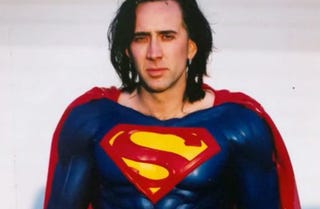
A Superb Starling. They are everywhere in Africa. I thought I had seen one of these before, and just remembered where. At one point, there was an actor cast for a movie that was never made. Now that I have the photos side-by-side, and I can no longer distinguish which is which.

Fighting wildebeest

A mother and baby cape buffalo.

Zebra rolling in the dirt.

Pumba! Running with antenna up.

Zebra scratching video
The affectionate lions


No comments:
Post a Comment